Push/Pull Compensation
Push/Pull Effect
Imagine that you have carefuly planned and digitized your design. When you finally stitch the file and see the result, you notice gaps between the color blocks. This is incredibly disappointing. All your hard work and everything seems to be distorted. This happens because each stitch will distort the fabric. There will be some shrinking (pulling) and expansion (pushing) of the fabric with every stitch.
Push describes fabric being pushed outward, often when dense stitches pack into an area and spread the fabric along the edges. Pull describes fabric being drawn inward, often along the direction of the stitches, where the fabric and stabilizer get tugged as the machine lays down thread.
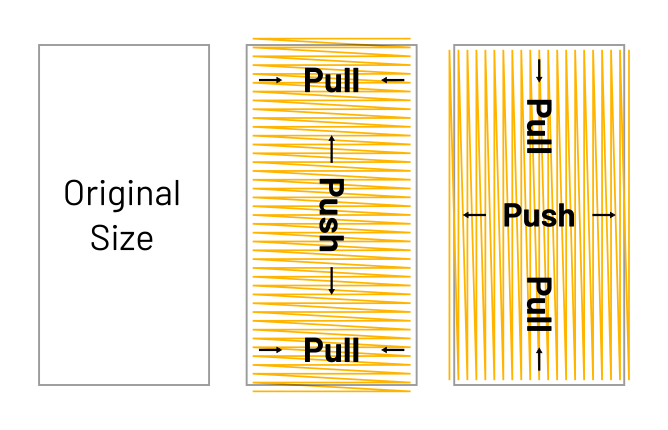
Push/Pull Compensation
Plan the embroidery paths accordingly to the distortion. Cut short on the sides where the pushing is happening and enlarge the shape on the other sides to compensate for the pull effect.
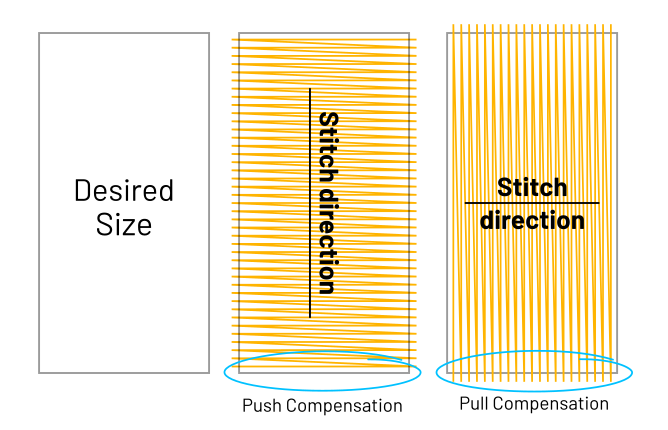
For the actual amount of compensation, there are many influencal factors to consider:
- fabric
- stabilizer
- design size
- stitch type, length and density
- underlay stitches
- hoop(-ing)
- machine speed
It might need a lot of testing to get the right compensation. Best way is to test sew with same conditions as you planned your finished design and finetune your shapes after you’ve seen the result.