Applique
Appliqué Directions
Appliqué is a technique in which one or more pieces of fabric are attached to a larger background fabric to create pictures or patterns. The word comes from the French meaning “applied or laid on another material.”
Benefits of Appliqué
A appliqué uses a piece of fabric to fill large area, rather than stitches. Appliqué can be used to add depth and texture, giving a project more dimension and visual interest.
For a subtle look, you can use thread that matches the appliqué or by using a very fine thread. If you want the stitches to stand out, use a contrasting thread so the stitches become part of the design.
Overview
Your file should have the following stitches:
- Placement stitches. This is to mark where you will need to place the fabric.
- Tackdown stitches. This is to hold the fabric in place prior to finishing the edges.
- Satin or zig-zag stitches. This is to finish the edge of the fabric.
There are two ways to prepare the appliqué:
Precutting appliqué fabric using a stitched cutting guide
- In your file, add a outline run for cutting. Use a basting stitch or a wide running stitch, and match the outline to the appliqué shape. This would be about the same size as the placement stitches, but larger than the tackdown stitches. Confirm the placement stitches and tackdown stitches are present.
- The outline, placement stitches and the tackdown stitches should be separate colors so the machine stops between steps.
- Hoop the appliqué fabric in your embroidery machine.
- Stitch only the outline run onto the appliqué fabric. You don’t need stabilizer for this.
- Remove the fabric from your machine and use the stitched outline as the guide to cut out the shape.
- Set the precut piece aside.
- Hoop your base fabric and start stitching the design, starting with the placement stitch.
- After the placement stitch finishes, the machine should stop. Keep the fabric in the hoop.
- Lay the appliqué fabric over the placement outline so it fully covers the stitched area. A light adhesive spray can help hold it in place.
- Restart the machine and stitch the tackdown. This step sews the appliqué fabric onto the base fabric around the shape.
- Stop the machine after the tackdown finishes. Keep the fabric in the hoop.
- Restart the machine and stitch the remaining step to cover the raw edge and complete the appliqué.
Cutting appliqué fabric after it is stitched in the design
- In your file, confirm the placement stitches and tackdown stitches are present.
- The placement stitches and the tackdown stitches should be separate colors so the machine stops between steps.
- Hoop your base fabric and start stitching the design, starting with the placement stitch.
- After the placement stitch finishes, the machine should stop. Keep the fabric in the hoop.
- Lay the appliqué fabric over the placement outline so it fully covers the stitched area. A light adhesive spray can help hold it in place.
- Restart the machine and stitch the tackdown. This step sews the appliqué fabric onto the base fabric around the shape.
- Stop the machine after the tackdown finishes. Keep the fabric in the hoop.
- Carefully trim away the excess appliqué fabric close to the tackdown stitches. Try to cut right up to the stitch line without cutting the base fabric or the stitches. Appliqué scissors help for this step.
- Restart the machine and stitch the remaining step to cover the raw edge and complete the appliqué.
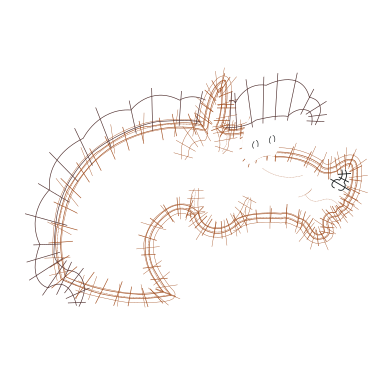
Applique Color Change (by Evan West)
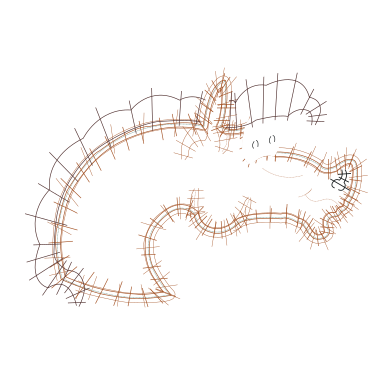
Applique Stop (by Evan West)